
Straw vs Rattan vs Wicker vs Raffia: What Actually Separates Them
Two buyers can order the same tote from two suppliers and end up with two bags that feel nothing alike. Same photos, same word on the invoice: straw.
That word covers four materials that behave in completely different ways.
One has a solid core and holds a shape. One is a technique you can apply to almost any fiber. One is a leaf. One is what is left of a grain crop after harvest.
Sorting them out takes ten minutes and saves a container of returns.
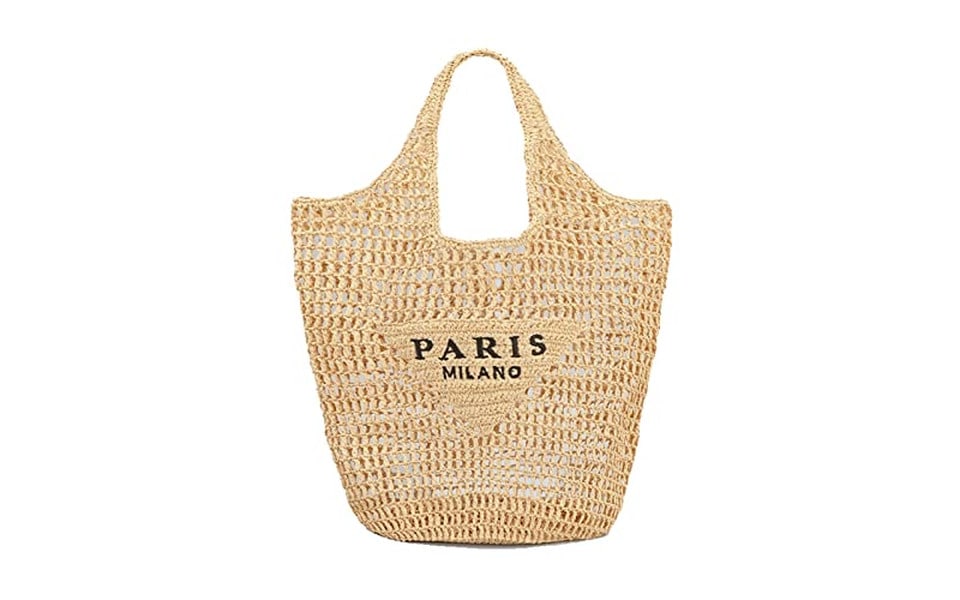
Four words, one shelf
Walk the straw bag aisle of any trade fair and you will see all four words used as if they were interchangeable. They are not.
The differences land on stiffness, weight, cost per unit, how the bag survives a humid warehouse, and how long it lasts in a customer's hands.
You can see how we split our own range across those materials on the products page.
The short version. Straw is a catch-all for dried stalks, and on fashion bags it usually means paper yarn.
Rattan is a vine with a solid core. Wicker is not a material at all, it is a weave. Raffia comes off a palm leaf and stays soft.
If you remember only that wicker is a verb, most of the confusion disappears.
Two more materials turn up in the same aisle and get quoted as straw because that is what shoppers type. Seagrass and bamboo behave closer to rattan core than to paper yarn, and both are usually priced in the middle of the range.
What straw means on a product page
Strictly, straw is the dry stalk of a grain crop: wheat, rice, rye, oats. Hollow, light, cheap, and brittle.
A bag woven from true straw tends to crack along a fold and shed short fibers onto a white shirt. Nobody wants that at retail.
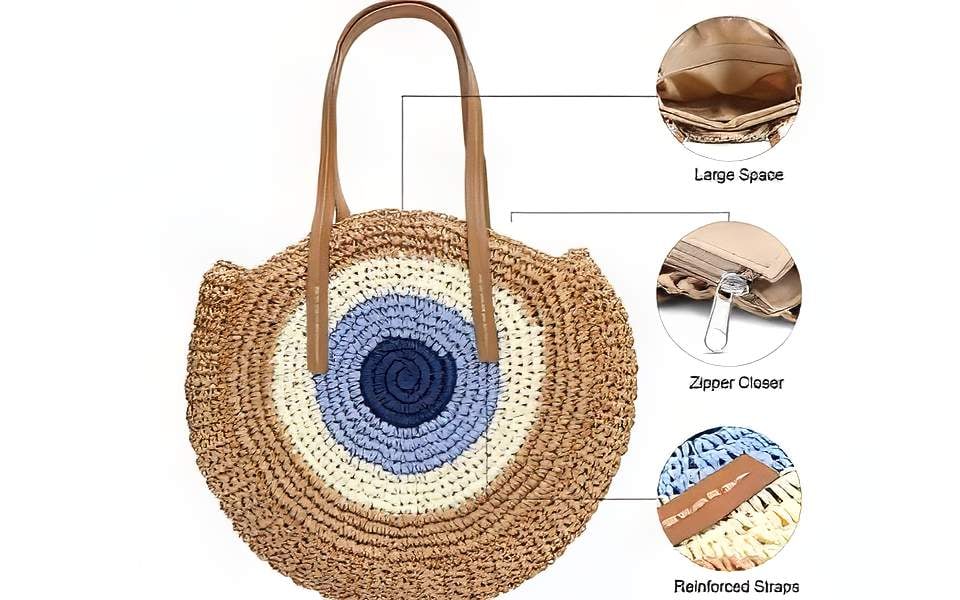
Most fashion bags sold as straw are not wheat straw. They are paper yarn twisted to look like straw, or a paper and cotton blend, or abaca from the Philippines. [💬]
Paper yarn photographs convincingly, takes dye evenly, and bends without snapping. It is also the cheapest of the four to weave, which is why it dominates the cheaper end of the range.
That matters for your spec sheet. Write straw and nothing else, and the factory will pick whatever reads as straw in a photo.
You will not find out which one you got until the sample lands, and by then the artwork is already approved.
Write the fiber, the twist, and the finish.
Rattan is a vine, and it holds a shape
Rattan grows as a climbing palm, harvested mostly in Indonesia and the neighboring countries. Stems are cut into long sections and peeled.
The outer skin is tough, glossy and looks like a thin bamboo shell. The inner core is lighter, more uniform, and it is what most bag frames are built from.
What rattan gives you is structure. A rattan frame keeps a square corner and resists collapsing when the bag is packed flat in a carton.
It also weighs more than a paper yarn weave of the same size, and it will not fold into a suitcase. Your customer finds that out on the first trip.
Both facts land on the invoice. Structure sells at retail. Weight costs you freight, and straw bags ship by volume, so a heavier build means paying for air you did not need.
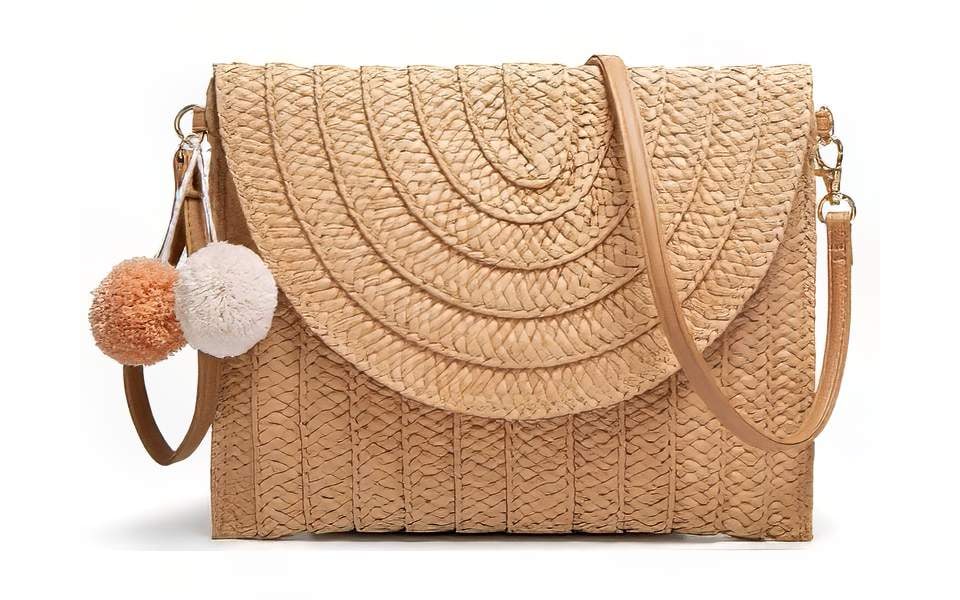
Wicker describes the weave, not the plant
Wicker comes from an old word for pliant twigs, and it names a technique: weaving stiff but bendable material over a frame. Willow, rattan core, reed, bamboo strips, seagrass, even extruded synthetic tube can all be wicker.
So a wicker bag is not a different plant from a rattan bag. It is a different construction. That is why one listing can say wicker and rattan and be accurate twice.
For buyers the practical difference is openness. Wicker constructions are usually more open, and the gaps let air through and let small items escape.
If your bag has to hold keys and a phone without an inner pouch, say so in the spec. Then weave density becomes a number instead of a suggestion.
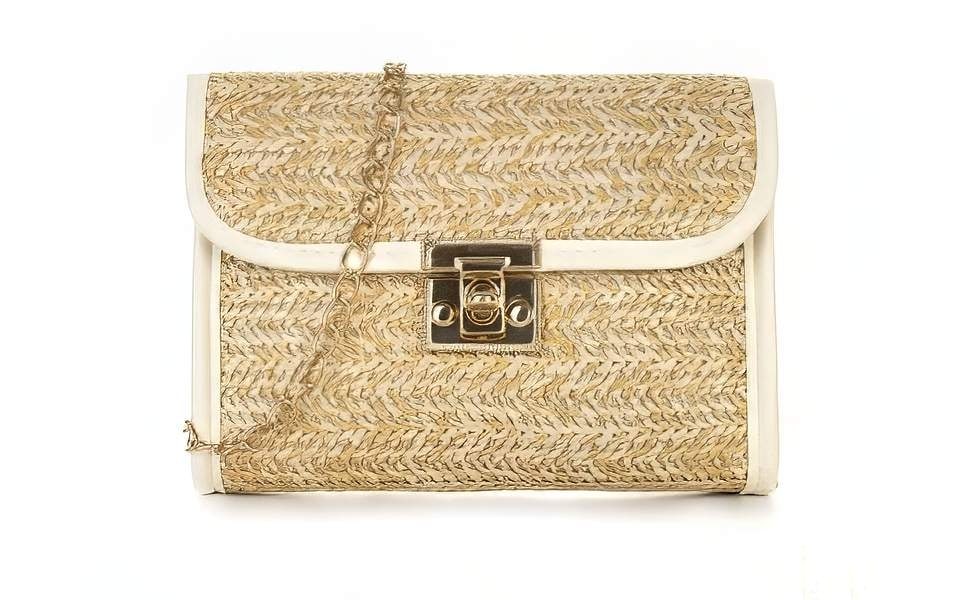
Raffia comes off a palm leaf and stays soft
Raffia is stripped from the leaflets of the Raphia palm, mostly in Madagascar and parts of Africa. The strips run long, flexible and slightly waxy.
They bend in any direction without cracking. That is why raffia sits behind most soft summer bags and the fine striped clutches that look almost like fabric.
Raffia takes color well and it knots cleanly, so it suits fringe, tassels and macramé detail. Very little of it goes to waste on the cutting table.
The trade-off is memory. Raffia does not hold a sharp edge. Press a raffia bag flat and it stays flat, and a crease in raffia is permanent.
If your design depends on a crisp silhouette, raffia is the wrong starting point, however good the sample photo looks.
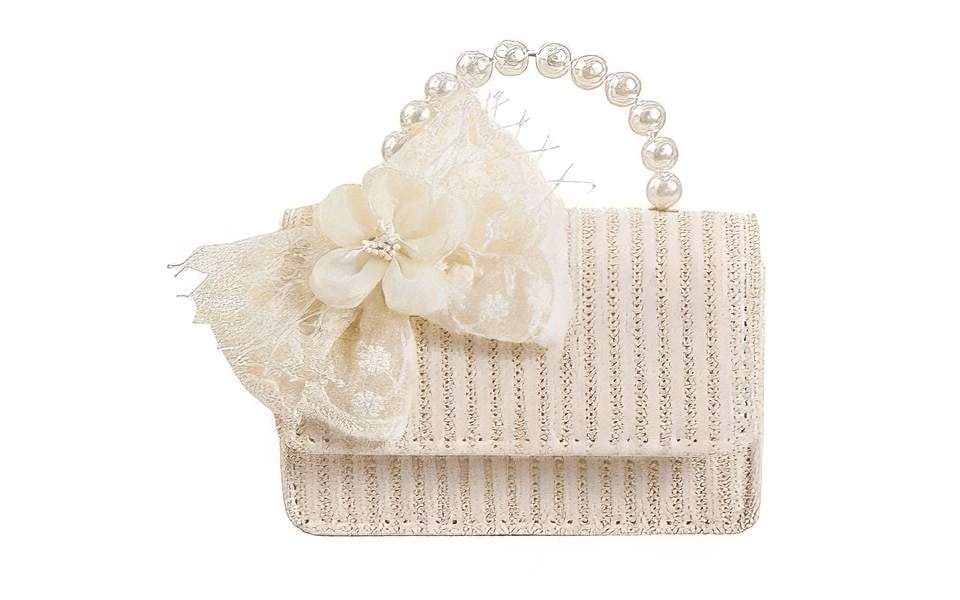
How each one is actually made
The making explains the price, so it is worth two minutes.
Rattan arrives as whole poles. Someone peels the skin off by hand or with a simple jig, then splits the core into the strand width the design needs.
That peeling step is skilled work, and it is why rattan core costs more than it looks.
Raffia arrives as bundles of dried strips. They get graded by width and color, dampened, then woven. Grading is the slow part. A mixed bundle shows up as streaks in the finished bag.
Paper yarn is spun from kraft paper, twisted, sometimes waxed, then woven on a frame. It is the most machine-friendly of the four, which is exactly why it is the cheapest.
Wicker is a frame plus time. Whatever the strand, someone has to weave it around a shape, and the openness of the pattern decides how many hours sit inside the bag.
How the four behave on the shelf and in transit
Stiffness runs rattan core, then wicker over a frame, then paper yarn, then raffia. Weight follows the same order.
A large tote in rattan weighs noticeably more than the same tote in paper yarn at the same dimensions.
Moisture is the shared weakness. All four are plant fiber and all four take on water.
A bag packed damp and sealed in a carton can develop mildew before it clears customs. We dry every batch before packing, and we still see it when a buyer's warehouse runs humid. [📝]
Shape in the carton is the next split. Rattan and framed wicker arrive holding their shape. Raffia and paper yarn need stuffing, and anything stacked on top leaves a mark.
Repair tells you what kind of product you are selling. A broken rattan strand can be spliced and hidden. A split raffia strip cannot, and the fix is a new bag.
Color consistency is where hand work bites. Two batches of raffia will not match exactly, and neither will two batches of rattan skin. Plan a tolerance into the range instead of promising an exact match. [💬]
Why the same bag carries three labels
Because the label is written by whoever builds the listing. A rattan core bag woven over a frame is rattan as a material, wicker as a technique and straw as a category. None of those three words is a lie.
What the label does not tell you is what the customer receives.
Two bags can share all three labels and still differ on whether the frame is rattan or plastic tube, whether the lining is cotton or non-woven, whether the handle is stitched through the body or glued onto the surface.
That is the reason to specify rather than describe. A spec travels from your sheet to the sample room to the line to the inspection table. A description stops at the photo.
Matching material to product
Open beach totes and market bags
Big volume, low structure, low weight. Paper yarn and raffia do this best, and an open weave keeps the bag light enough to carry all day. This is the build behind our large beach tote.
Ask for a reinforced base panel and stitched handle anchors. Skip them and the bag sags at the attachment points by the second season. [📝]
Keep the pattern simple too. A very open weave in a light color shows every shadow of what is inside.
A cotton lining solves that for a dollar or two per bag. Whether the cost is worth it depends on who is buying.
Structured handbags and crossbody bags
Rattan core, or wicker over a rigid frame. Corners stay square, the bag stands up on a shelf, and it survives compression in a carton. Our structured tote is built this way.
Accept the extra weight, or move the design to a half lined paper yarn with an internal stiffener. The second option looks close and ships cheaper, and it lasts one summer instead of three.
Frames are worth checking on the sample. A plastic tube frame keeps the shape and loses the story that makes the bag sell.
Evening bags and clutches
Raffia or fine paper yarn, tight weave, small format. The bag has to look precise from 10 inches (25 cm) away, so weave density and edge finishing carry the whole product.
This is where a cheap weave shows first. Buyers notice the rim, not the front panel.
Care and storage
Every one of these bags is plant fiber, so the care card is nearly the same.
Wipe with a damp cloth, never soak. Dry in shade, because direct sun fades raffia and darkens rattan skin unevenly.
Store stuffed, in a breathable dust bag, away from a damp wall. A sealed plastic bag holds moisture in and is the fastest way to grow mildew.
If a shape goes soft, damp the bag lightly and reshape it, then let it dry with the stuffing still inside.
Smell deserves a line on the care card too. A closed, damp straw bag can pick up a musty odor that never fully leaves. Air it for a day before storing, and most of the time it will not happen.
What to lock down before you place an order
Four specs decide whether the shipment matches the sample.
The fiber itself, named rather than described. Paper yarn 2 mm, rattan core 3 mm, raffia strip 4 mm, plus the finish on top of it.
The weave density in strands per inch, on the body and on the base. Open weaves photograph identically and behave nothing alike.
The handle attachment. Stitched through the body with a backing patch holds far better than a glued tab, and it is the first failure point on a cheap build.
The moisture reading at packing. Ask for it, and ask what the factory does when the reading comes back high.
Around those four sit the commercial numbers. Our sample lead time is 6 days and production runs 10 days. MOQ is 6 pieces per color, and carton quantity depends on the bag size.
Straw bags ship by volume, so carton quantity moves your landed cost more than the unit price does.
Mistakes we see in buyer specs
Writing straw without naming the fiber, then asking why the second order looks different from the first.
Choosing raffia for a bag that has to stand upright on a counter.
Skipping the lining on an open weave to save cost, then processing returns because keys fall through.
We have approved samples on a white background more than once, then found the color different in daylight. Natural fiber shifts, and warm warehouse light hides a lot.
Pricing a wicker bag against a rattan bag as if wicker were a plant.
Frequently asked questions
Is rattan a type of straw?
In trade language, often yes. Botanically, no. Rattan is a climbing palm and straw is a dried grain stalk.
Most bags sold as rattan straw are built from rattan core or rattan skin, and the listing uses straw because it is the term shoppers search.
Can straw bags get wet?
They survive a splash and they should not be soaked. All four materials are plant fiber and all four absorb water.
Wipe with a damp cloth, dry in shade, and never seal a damp bag in a carton.
Which one is cheapest?
At the same size and weave density, paper yarn usually lands lowest, raffia sits in the middle, and rattan core and hand braided wicker sit highest.
Handwork hours move that number more than the raw material does.
Can all four be private labeled?
Yes, with different mechanics. Woven labels and printed panels suit paper yarn and raffia. Leather patches and metal plates suit rattan and framed wicker.
Monogram embroidery works on a tight weave and distorts an open one.
How do I tell rattan from plastic tube?
Look at the cut ends. Rattan core shows fiber and a slight irregularity. Extruded tube is perfectly round and uniform.
Weight helps too. Plastic tube feels light for its thickness, and it does not warm up in the hand the way a natural strand does.
Where to start
If the material question is still open on your range, send the silhouette, the target retail price and the quantity you have in mind, and ask for a sample in the two materials you are torn between.
A sample pair settles it faster than any spec sheet. Sample lead time is 6 days, so you can have both in hand before the range review.
We weave in Guangzhou and ship worldwide. Reach the team on the contact page, or read how we run sampling and inspection on the about page.